Programmatic vs Bespoke
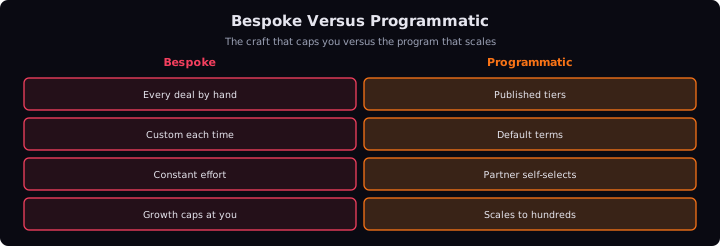
Early partnerships are bespoke: every deal negotiated by hand, every term custom, every onboarding a project. That craft wins the first partners but caps the hundredth. This lesson shows how to convert repeated bespoke work into standard programs with tiers, published terms, and default paths, while keeping room for the rare deal that truly deserves custom treatment.
By the end you can
- Distinguish bespoke partnership work from programmatic partnership work.
- Explain why bespoke deals cap the size of an ecosystem.
- Describe how tiers and default terms turn one-off deals into a program.
- Decide which partnerships still warrant bespoke treatment.
The craft that caps you
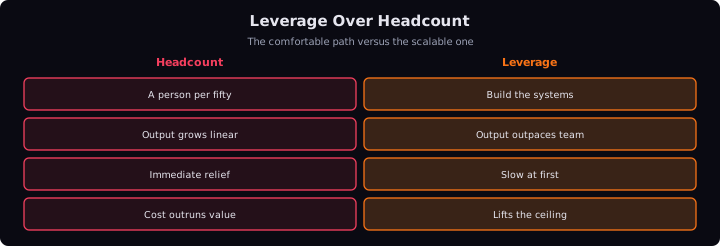
Every ecosystem starts bespoke. You court a handful of partners, negotiate each agreement line by line, tailor the revenue split to the room, and personally shepherd each one through onboarding. This is the right way to land the first ten partners, and it feels like real work because it is. The trouble is that bespoke does not add up. The effort to sign partner one is roughly the effort to sign partner one hundred, which means your ecosystem grows only as fast as you can personally negotiate. The very craft that won the early wins becomes the ceiling on the later ones.
What programmatic means
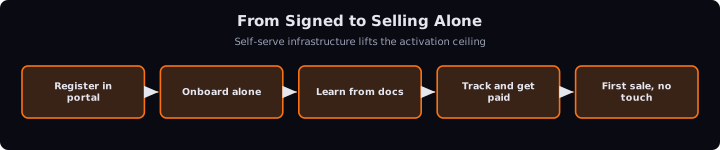
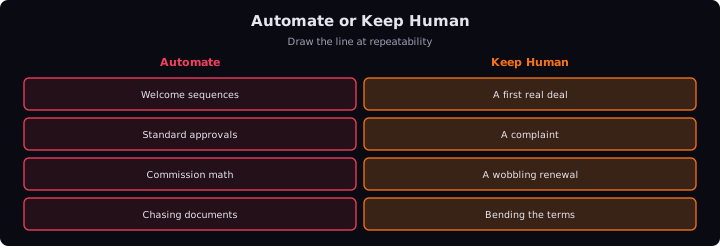
A program replaces custom negotiation with standard paths. Instead of inventing terms for each partner, you publish a small set of tiers, each with its own defined benefits, requirements, and revenue share. A partner sees where they fit, what they get, and what is expected, without a single call. The terms are written down, the margins are set, and the exceptions are rare and deliberate. Programmatic does not mean impersonal; it means the default answer already exists, so your attention goes to the partners and moments that actually need judgment rather than to re-deriving the same deal over and over.
Turning repetition into a tier
The signal that something should become a program is repetition. When you find yourself negotiating the same clause, granting the same discount, or answering the same onboarding question for the fifth time, that pattern is asking to be standardized. Watch what your bespoke deals actually converge on: most partners want the same three or four things, and your custom terms tend to cluster around a couple of shapes. Those clusters are your tiers. A reseller tier, a referral tier, and a strategic tier will cover the great majority of partners, each with published, defensible defaults. The work shifts from crafting deals to designing and maintaining the program that crafts them for you.
When bespoke still earns its keep
Standardizing everything is its own mistake. A genuinely strategic partner, one whose scale or reach changes your business, can warrant terms no tier anticipates, and forcing them into a template signals that you do not grasp what they bring. The discipline is to make bespoke a deliberate exception, not a default. A useful rule: the program handles the many, and a named, small set of relationships gets hand-built terms because the value clearly justifies the cost of custom work. If you cannot name why a deal is bespoke, it should not be. That line, drawn on purpose, is what lets you scale the routine without losing the few relationships worth bending for.
Check your understanding
Answer each from memory. Your results are saved in this browser and count toward your readiness — sign in (account panel above) to keep them across devices.
Why do bespoke, hand-negotiated deals cap how large an ecosystem can grow?
What is the clearest signal that a bespoke pattern should be turned into a standard program?
When does a partnership still justify fully bespoke terms?