The Bilingual Operator
The partner professional who moves the needle in the AI era is bilingual: fluent in the language of engineering and product, and equally fluent in the language of revenue and economics. This lesson defines that skill, shows why it is now the scarce one, and explains why translation, not relationship-building alone, is what makes a partnership real.
By the end you can
- Define what it means to be a bilingual operator across technical and commercial worlds.
- Explain why translation has become the scarce, high-value partner skill.
- Distinguish translation from simply relaying messages between teams.
- Recognize the cost when no one in the partnership can speak both languages.
Two rooms, two languages
Every real partnership lives across two rooms. In one room, engineers and product managers ask whether an integration is feasible, what it will cost to build, and how it fits the roadmap. In the other, the chief revenue officer and the finance team ask what pipeline it creates, what it costs to fund, and when it pays back. These rooms use different words for the same thing. Engineering calls it an API contract; sales calls it a reason to close. The bilingual operator is the person who is genuinely fluent in both, who can sit in either room and be taken seriously.
Why this skill is now scarce
For years the partner role was defined by relationships, working the golf course, remembering birthdays, keeping the other side warm. Those skills still matter, but they no longer decide outcomes. In the AI era, partnerships are technical: they involve model access, data flows, embedded agents and joint products that must actually be built and integrated. A warm relationship cannot ship an integration. The scarce skill is the person who can translate a product roadmap into a revenue case and a revenue target into an engineering requirement. Most people are fluent in one language and merely tourists in the other, which is why the true bilingual operator is rare and valued.
Translation is not relaying
Translation is often confused with relaying. A relayer carries a message unchanged from one room to the other: engineering says the connector is not on the roadmap, and the relayer repeats that to the partner. A translator does something harder. They understand why engineering deprioritized the connector, reframe the partner's request as pipeline the CROThe chief revenue officer, the leader accountable for the company's revenue and sales execution. They evaluate a partnership by the pipeline it creates and the deals it helps close. already wants, and return to engineering with a business case that changes the roadmap decision. Relaying moves words. Translation changes outcomes because it carries meaning, motive and value across the boundary, not just the sentence.
The cost of no translator
When no one can speak both languages, partnerships stall in predictable ways. Engineering builds an integration no customer asked for. Sales promises a capability that does not exist. The partner grows frustrated because every request disappears into a technical black box. Consider a common failure: a partner team signs a splashy agreement, the press release goes out, and eighteen months later nothing has shipped because the deal was negotiated by people who could not translate the commercial ambition into a buildable, funded plan. The signature was the easy part. The translation was the job no one did.
What the rest of this module builds
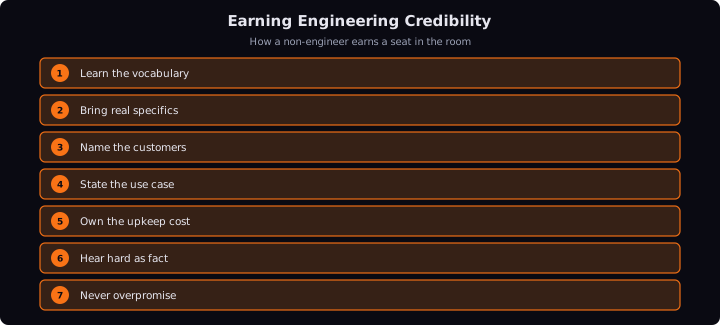
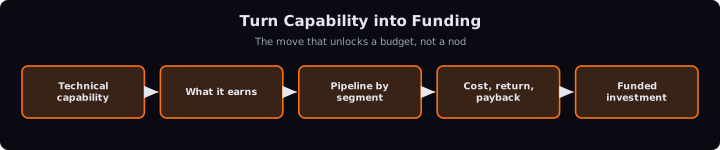
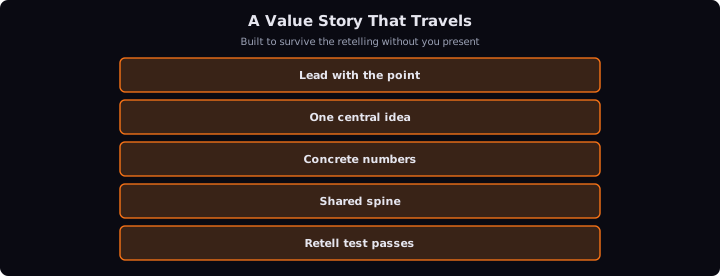
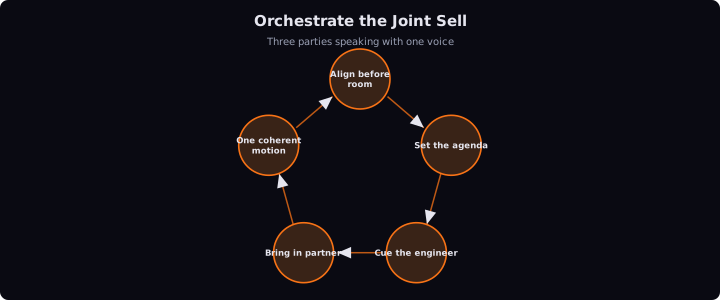
This module builds the bilingual skill piece by piece: how to earn credibility with engineering and product, how to speak to the CRO and CFOThe chief financial officer, the leader accountable for the company's capital and financial risk. They evaluate a partnership as an investment: cost, expected return, payback and risk., how to write a value story that travels without you, and how to run a joint technical sell. Each lesson is one dialect of the same fluency. The operator who masters all four stops being a messenger and becomes the person a partnership cannot happen without.

Check your understanding
Answer each from memory. Your results are saved in this browser and count toward your readiness — sign in (account panel above) to keep them across devices.
What best describes a bilingual operator in a partner role?
How does translation differ from relaying?
Why has translation become the scarce partner skill in the AI era?