Causal Layered Analysis
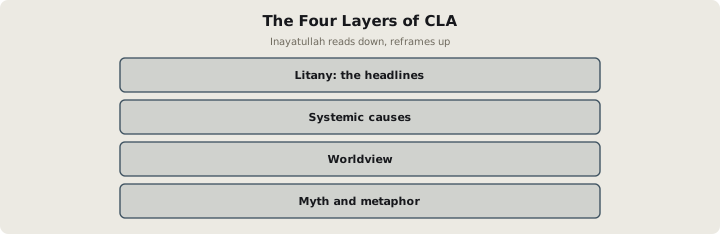
Sohail Inayatullah's causal layered analysis reads a future at four depths: the litany of headlines, the systemic causes beneath them, the worldview that frames those systems, and the myth or metaphor at the deepest layer. The method is not only diagnostic. By working down through the layers and then back up, an analyst can reframe a problem and open alternative futures that surface-level debate never reaches.
By the end you can
- Name Inayatullah's four layers and what each one captures.
- Explain why analysis conducted only at the litany layer produces shallow futures.
- Apply the four layers to a concrete security case to reframe it.
- Describe how moving back up the layers generates alternative futures.
Four layers, not one surface
Sohail Inayatullah developed causal layered analysis to stop foresight collapsing into argument about the surface. He proposes reading any future at four depths. The litany is the visible layer: headlines, official statistics, the taken-for-granted framing repeated on the news. Beneath it sit the systemic causes, the economic, political and technological structures that produce the litany. Below those lies the worldview, the deep assumptions and ideologies that make a given system seem natural. At the base is the myth and metaphor, the unconscious story or image that holds the whole edifice together. Each layer is real and each demands a different kind of question.
Why the litany is a trap
Most analysis, and almost all public debate, never leaves the litany. It reacts to the headline, proposes a fix pitched at the headline, and calls that foresight. Inayatullah's point is that a future built only at the litany layer is shallow and short-lived, because it never touches the structures or beliefs that generated the problem. To take a security example, the litany of ransomware is the count of attacks and the ransom paid. The systemic layer is the insurance market, the cryptocurrency rails and the patching economics that make attacks profitable. The worldview is a model of security as perimeter defence and of crime as an external intrusion. The myth beneath is the fortress: the belief that safety comes from higher walls. An intervention aimed only at the count of attacks leaves all three lower layers untouched.
Reading down, then reframing up
The method's power is that it works in both directions. Reading down deepens diagnosis; reading back up generates alternatives. Once the fortress myth is named, an analyst can ask what a different metaphor would make possible, a garden that is tended rather than a fortress that is walled, a body that builds immunity rather than a border that is patrolled. A new metaphor licenses a new worldview, which permits new systems, which changes the litany. This is how causal layered analysis produces alternative futures rather than a single forecast: it changes the story at the bottom and lets the change propagate upward.
A worked reading: sovereign cloud
Consider the European debate over the sovereign cloud. At the litany layer sits the reassuring claim that data held in a European data centre is under European control. The systemic layer is harder: the United States CLOUD Act reaches data held by American-headquartered providers regardless of where the servers physically sit, so location of hardware does not settle jurisdiction. The worldview beneath is a territorial conception of sovereignty, the assumption that control follows physical geography. The myth at the base is digital independence, the comforting image of a self-sufficient European technosphere. DSI's own SEAL-0 work turns on exactly this gap between the litany and the systemic reality. Read this way, the debate is not about where servers live but about which story of sovereignty a continent is willing to believe, and that is a question the litany can never reach.
Check your understanding
Answer each from memory. Your results are saved in this browser and count toward your readiness — sign in (account panel above) to keep them across devices.
What are the four layers of causal layered analysis, from surface to depth?
Why does causal layered analysis treat the litany layer as a trap?
In the sovereign-cloud reading, what sits at the myth layer?