Who Owns Sustainability Data?
Ask who is answerable for a company's emissions figure and you often get silence. Sustainability data is easy to orphan because it crosses so many teams and belongs cleanly to none. This lesson separates ownership from stewardship, explains the responsibility gap that leaves data unattended, and argues that naming a clear owner is the first act of governance.
By the end you can
- Explain why sustainability data is so often left without a clear owner.
- Distinguish ownership (accountability) from stewardship (day-to-day care).
- Describe the responsibility gap that leaves data orphaned and untrusted.
- Recognise naming a clear owner as the first act of governance.
The question no one answers
Walk into most companies and ask a simple question: who is answerable if the emissions figure in the annual report turns out to be wrong? You will usually get pointing rather than an answer. Facilities gathered the energy data, finance holds the travel records, procurement chased the suppliers, and the sustainability team wrote it all up. Each did a piece, and none feels answerable for the whole. Sustainability data is easy to orphan precisely because it crosses so many teams and belongs cleanly to none of them. An orphaned number is a number no one defends, and in an audited world that is a serious exposure.
Ownership is not the same as stewardship
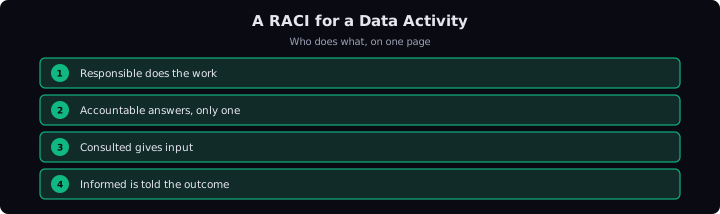
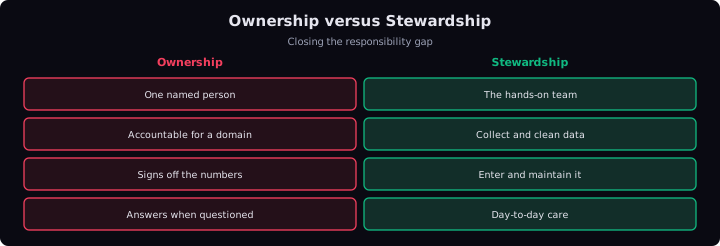
Two ideas get muddled here, and separating them clears most of the fog. Ownership is accountability: one named person who is answerable for a data domain, who signs off that the numbers can be trusted, and who carries the consequences if they cannot. Stewardship is the day-to-day care: the people who actually collect, enter, clean and maintain the data. A workforce-diversity figure might be stewarded by an HR analyst who updates it every quarter, while the HR director owns it and answers for it. Both matter, but they are different jobs. Confusing them is why so many firms have plenty of people touching the data and no one accountable for it.
The responsibility gap
The space between many stewards and no clear owner is the responsibility gap, and it is where trust quietly dies. When something is everyone's job it becomes no one's job. A supplier emissions figure that looks odd sits untouched because the procurement analyst assumes sustainability will check it, and sustainability assumes procurement already did. No one is wrong, exactly; there is simply no one whose name is against the number. Come audit time, the auditor asks who stands behind this figure and the honest answer is that nobody quite does. That gap is not a personality failing. It is what happens when a data domain grows important faster than anyone assigns responsibility for it.
Naming an owner is the first act of governance
The fix is unglamorous and powerful: give each domain of sustainability data a single, named owner, and make clear who stewards it beneath them. This is the first real act of governance, and everything else in this module builds on it. An owner does not have to do the collecting; they have to be answerable that it is done well and be reachable when a figure is questioned. The moment a finance director knows the workforce data owner by name, and that owner knows their stewards, the orphan has a home. Consider a mid-sized firm that assigns one owner per topic: emissions to the head of operations, workforce data to HR, supplier data to procurement. Suddenly every figure has a face, and the auditor's question has an answer.
Check your understanding
Answer each from memory. Your results are saved in this browser and count toward your readiness — sign in (account panel above) to keep them across devices.
What is the difference between owning sustainability data and stewarding it?
Why is sustainability data so easily left orphaned?
What is the first real act of governance for a sustainability data domain?