Automating the Infrastructure

If trust is the destination, automation is how a business actually gets there and stays there. This module moves from the argument to the machinery: why manual, spreadsheet-based collection quietly erodes trust every cycle, what it means to connect sources into an automated flow, how to build provenance and checks into that flow so trust becomes automatic rather than heroic, how one trusted source can power compliance, strategy and risk at once, and how to choose tools without locking yourself in. It is strategic, not technical: leaders learn what to insist on, not how to write code.

  • automation
  • data-pipelines
  • secure-by-design
  • single-source-of-truth
  • data-provenance
  • vendor-lock-in
12 min · Core

The Manual Trap

Most sustainability reporting still runs on spreadsheets and email. That works once, at small scale, but it does not scale and it quietly erodes trust with every cycle. Each manual step adds a chance to err, and because the work is redone by hand each year, the same fragile process is repeated rather than improved. This lesson explains why manual collection is a trap, not just a nuisance.

~4 min

By the end you can

  • Explain why manual, spreadsheet-based collection fails to scale.
  • Describe how manual steps quietly erode trust each reporting cycle.
  • Recognise the hidden cost of key-person dependence in a manual process.
  • Distinguish a one-off manual effort from a repeatable, automated flow.

The spreadsheet that started it all

Almost every sustainability programme begins the same way: one capable person, one spreadsheet, a folder of emails from suppliers, and a deadline. For the first report this is entirely reasonable. The volumes are small, the person knows every cell, and the answer arrives on time. The trouble is that this beginning becomes the permanent method. What was a sensible first step hardens into the way the organisation collects data forever, and that is the trap. A method built for one small report is asked to carry a growing, audited domain, and it cannot.

Why manual work does not scale

Scale exposes the flaw. When a firm reports for three sites it can copy figures by hand; when it reports for three hundred sites and a thousand suppliers, hand-copying becomes impossible to do well. The work does not grow gently; it grows with the number of sources, and each new source adds another email chain, another format to reconcile, another figure to paste into the right cell. A retailer that adds fifty stores does not add a little work, it adds fifty more collection efforts that all funnel through the same overloaded analyst. The process bends, then breaks, and the breakage shows up as missed deadlines and rushed, unchecked numbers.

How trust quietly leaks away

The deeper damage is to trust. Every manual step, every copy, every retyped figure, every formula dragged across a new column, is a chance to introduce an error that no one will catch. These mistakes are rarely dramatic; they are a transposed digit, a wrong unit, a stale figure from last year left in place. Because the work is invisible once the report is filed, the errors accumulate silently. A finance director asked whether the number is right can only say the team is careful, which is not the same as saying the process is sound. Manual collection does not fail loudly; it erodes confidence one small slip at a time.

The person who knows where the bodies are buried

Manual processes also concentrate knowledge in one head. The analyst knows which tab feeds which formula, which supplier always sends the wrong unit, and which adjustment to apply. None of this is written down, because it lives in the doing. When that person is ill, busy or leaves, the method leaves with them, and the next cycle is rebuilt from guesswork. This key-person dependence is a quiet business risk that most leaders never see until the person is gone. A trustworthy process cannot depend on one memory.

One-off effort versus a repeatable flow

The way out is to see the difference between doing the work once and building something that does the work every time. A manual report is a one-off effort repeated from scratch; an automated flow is a repeatable capability that improves rather than restarts. The rest of this module is about making that shift, so that trust is produced by the design of the system rather than by the heroics of one exhausted person the night before the deadline.
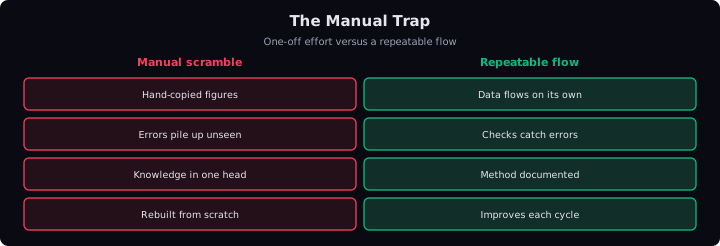
A method built for one small report cannot carry a growing, audited domain.

Check your understanding

Answer each from memory. Your results are saved in this browser and count toward your readiness — sign in (account panel above) to keep them across devices.

  1. Why does a manual, spreadsheet-based process fail to scale?

  2. How does a manual process quietly erode trust over time?

  3. What is the hidden risk when a manual process depends on one knowledgeable person?
13 min · Core

Pipelines and Integration

Automation replaces the manual scramble with a pipeline: a set of connections that pull data from where it already lives into a single flow, on a schedule, without a person copying anything. This lesson explains integration and pipelines in plain terms for non-technical leaders, so they can picture the shift and know what to ask for, without needing to understand any code.

~4 min

By the end you can

  • Explain, without jargon, what a data pipeline does.
  • Describe integration as connecting existing systems rather than replacing them.
  • Contrast a scheduled automated flow with a yearly manual scramble.
  • Recognise what a leader should ask for without needing technical detail.

What a pipeline actually is

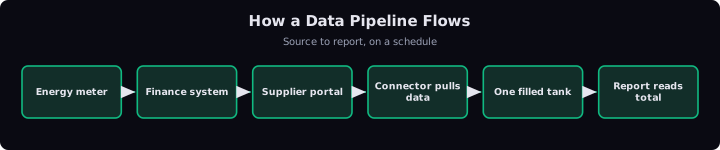
Strip away the jargon and a data pipeline is simple: it is a set of automatic connections that move data from where it is created to where it is needed, without anyone copying it by hand. Think of it as plumbing. Water is produced at a source, flows through pipes, and arrives at a tap ready to use. A data pipeline does the same for information: the energy meter, the expenses system, the supplier portal each produce figures, and the pipeline carries them into one place, on a set schedule, so the report draws from a filled tank rather than a frantic search.

IntegrationConnecting the systems a business already has, such as finance, HR and facilities, so they can pass data to each other automatically, rather than replacing them with a single new system.: connect, do not replace

The word that frightens leaders is integration, but the idea is reassuring. Integration means connecting the systems a business already has so they can pass data to each other, not ripping them out and starting again. The finance system stays. The human-resources system stays. The facilities and energy systems stay. What changes is that a connection, often called a connector, is built so each of these can hand its data to the sustainability flow automatically. Consider a manufacturer whose energy data sits in one system and travel data in another. Integration lets both feed the emissions calculation without anyone exporting a file and emailing it on.

From once a year to always on

The most important shift a pipeline delivers is timing. A manual process is a once-a-year event: the team wakes the data up, hunts it down, and assembles it under pressure. A pipeline runs on a schedule, perhaps monthly or continuously, so the data is always current and the report becomes a matter of reading a total that is already there. This is the difference between cooking a meal from an empty kitchen the moment guests arrive and keeping a well-stocked pantry. The second is calmer, cheaper over time, and far less likely to go wrong.

What a leader should ask for

A non-technical leader does not need to know how a connector is built, only what to insist on. Ask three questions. First, can this pull data automatically from the systems we already use, rather than asking people to re-enter it. Second, does it run on a schedule so the data stays current between reports. Third, when a source changes, how much effort is needed to keep the connection working. If the answers are vague or every source needs a person in the middle, it is not really a pipeline, it is the old scramble in new clothing. Knowing these questions is enough to hold a vendor or an internal team to account.

Why this matters for trust

A pipeline is not only faster; it is the foundation for trust, because it removes the manual steps where errors and key-person risk crept in. Once data flows automatically from source to report, the organisation can start doing something a manual process never could: build checks into the flow itself. That is the subject of the next lesson.

A pipeline carries figures from where they are created to where they are needed.

Check your understanding

Answer each from memory. Your results are saved in this browser and count toward your readiness — sign in (account panel above) to keep them across devices.

  1. In plain terms, what does a data pipeline do?

  2. What does integration mean in this context?

  3. Which question best tests whether a proposed flow is truly automated rather than the old scramble?

14 min · Core

Controls Built Into the Pipeline

Speed alone does not create trust; an automated flow can carry bad data just as fast as good. The step that makes trust automatic is building controls into the pipeline itself: recording where each figure came from, checking it as it flows, and protecting it from tampering. This is the secure-by-design idea applied to sustainability data, so the number arrives already defensible.

~4 min

By the end you can

  • Explain why an automated flow still needs controls built in.
  • Define provenance, validation and integrity in plain terms.
  • Explain the secure-by-design principle for sustainability data.
  • Describe how built-in controls make a figure defensible under audit.

Fast is not the same as trustworthy

A pipeline that moves data quickly has solved speed, not trust. If the figures flowing through it are wrong, automation simply delivers wrong answers faster and more confidently. The lesson leaders often miss is that automation is the opportunity to bake trust in, but only if the controls are designed as part of the flow rather than bolted on afterwards or, worse, left to a manual check at the end that no one has time for. The goal is a number that arrives already defensible.

Three controls that make trust automatic

Three controls carry most of the weight. The first is provenance: recording, automatically, where every figure came from, when, and from which system. ProvenanceA record, captured automatically as data flows, of where each figure came from, when, and from which system. It answers an auditor's first question, how do you know this number. is the answer to an auditor's first question, how do you know this number, captured as the data flows rather than reconstructed later from memory. The second is validation: automatic checks that catch obvious problems as data enters, such as a figure in the wrong unit, a value ten times larger than last month, or a missing entry for a site that always reports. The third is integrity: making sure that once a figure is captured it cannot be quietly changed without a trace, so what the auditor sees is what the source produced.

Secure by designThe principle that trust is built into how a system works rather than inspected into the output at the end, so errors are caught as they occur and every figure carries its own history., not secure by inspection

Together these express a principle borrowed from good engineering: secure by design. It means trust is a property of how the system is built, not something added by inspecting the output at the end. Contrast two firms. One collects data any way it likes and then hires people to check the final report, hunting for errors after the fact. The other builds provenance, validation and integrity into the flow, so most errors are caught the moment they occur and every figure carries its own history. The second firm spends less effort and produces a far more defensible result, because the trust is manufactured continuously rather than rescued at the deadline.

Why this changes the audit

When controls live in the pipeline, the audit conversation changes entirely. Instead of the team scrambling to reconstruct where a figure came from, the system already holds the answer: this value entered on this date from this meter, passed these checks, and has not been altered since. An auditor can follow that trail directly. Consider a supplier emissions figure that failed a validation check for being implausibly low and was flagged automatically, corrected, and logged. That record is exactly what turns a doubtful number into a defensible one. The pipeline does not just carry the data; it carries the evidence that the data can be believed.

The payoff

Building controls into the flow is the difference between hoping the numbers are right and being able to show that they are. It is how the trust argument of the earlier module becomes an operating reality rather than an aspiration. A well-designed pipeline makes the defensible number the default output, not a special achievement, which is precisely what an assured, investor-grade, legally exposed world demands.

Three controls in the flow make the defensible number the default output, not a rescue.

Check your understanding

Answer each from memory. Your results are saved in this browser and count toward your readiness — sign in (account panel above) to keep them across devices.

  1. Why does an automated pipeline still need controls built into it?

  2. Which of these correctly matches a control to its meaning?

  3. What does the secure-by-design principle mean for sustainability data?

12 min · Core

Reuse and a Single Source of Truth

Once data flows automatically and carries its own controls, a business can stop rebuilding the same figures for every purpose. A single trusted source can power compliance reporting, strategic decisions and risk analysis at once. This lesson explains the single source of truth and why reuse, not re-collection, is the mark of mature sustainability data.

~4 min

By the end you can

  • Define a single source of truth in plain terms.
  • Explain the cost of maintaining several conflicting versions of the same figure.
  • Describe how one trusted source powers compliance, strategy and risk.
  • Recognise reuse rather than re-collection as a sign of maturity.

The many-versions problem

In a fragmented organisation, the same emissions figure exists in several places at once, and they rarely agree. The sustainability team has one number in its report, finance has a slightly different one in a board pack, and the sales team quotes a third to a customer. Each was built separately, for a separate purpose, at a separate time. When a bank or an auditor asks which is correct, there is no good answer, because all three claim to describe the same reality yet none is the master. Conflicting versions do not just cause embarrassment; they destroy the confidence that any single figure can be trusted.

What a single source of truth means

A single source of truth is the cure: one trusted, controlled place where each figure lives once, and every report, dashboard and decision draws from that same place rather than from a private copy. It does not mean one giant system for everything; it means that when someone asks for the carbon figure, there is a definitive answer everyone pulls from, complete with its provenance. If the figure is corrected at the source, every use of it updates, so the board pack, the disclosure and the customer quote can no longer drift apart. There is one number, and it is the number.

One source, three jobs

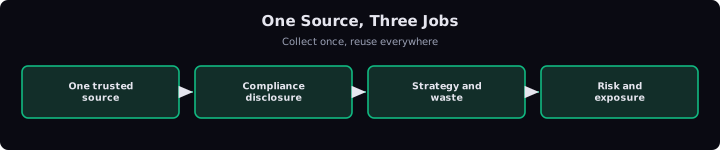
The reward for building this is reuse. The same trusted dataset can serve three very different needs without being rebuilt for each. For compliance, it feeds the audited disclosure the regulation demands. For strategy, the same figures reveal where energy is wasted or which products carry the highest footprint, guiding investment. For risk, they show where the business is exposed to future carbon costs or to a fragile supplier. Consider a firm that measures supplier emissions once, well: that single effort satisfies the CSRD disclosure, informs which suppliers to consolidate, and flags which relationships are a future liability. Three outputs, one collection.

Reuse is the mark of maturity

This is the clearest sign that a business has crossed from a manual world into an infrastructure one. Immature organisations re-collect the same data again and again, once for the report, again for the board, again for a customer questionnaire, each time from scratch and each time slightly different. Mature ones collect once and reuse everywhere. Reuse is cheaper, faster and, above all, consistent, and consistency is itself a form of trust: when every part of the business quotes the same figure, outsiders can believe it. Re-collection signals that the infrastructure is not yet real; reuse signals that it is.

The strategic point

A single source of truth is where the three acts of the earlier module finally join. The data that was once merely reported now serves strategy and risk from the same trusted foundation, and because it is controlled and traceable, it can be believed. Building one source and reusing it is how a business turns sustainability data from a recurring cost into a durable asset it owns.

A single trusted dataset powers compliance, strategy and risk from one collection.

Check your understanding

Answer each from memory. Your results are saved in this browser and count toward your readiness — sign in (account panel above) to keep them across devices.

  1. What is a single source of truth for sustainability data?

  2. Why do several conflicting versions of the same figure destroy trust?

  3. One well-built trusted source can serve which three needs at once?

13 min · Core

Build, Buy or Platform

Every business automating its sustainability data faces the same choice: build a system in-house, buy a specialist tool, or adopt a broad platform. There is no single right answer, but there is a wrong way to choose, which is to pick a tool that traps your data inside it. This lesson gives leaders the terms of the decision and, above all, what to insist on so they keep control of their own data.

~4 min

By the end you can

  • Describe the build, buy and platform options and their broad trade-offs.
  • Explain what vendor lock-in is and why it is dangerous for owned data.
  • List the non-negotiables a leader should insist on in any tool.
  • Explain why owning the data matters more than owning the tool.

Three ways to get there

Once a business decides to automate, it meets a familiar fork. It can build its own system, giving maximum control but demanding scarce engineering effort and long-term upkeep. It can buy a specialist sustainability tool, which is faster to adopt and purpose-built, but narrower and dependent on one vendor's direction. Or it can adopt a broad platform that handles many kinds of data, of which sustainability is one, gaining breadth and integration at the cost of specialist depth. Most firms land on buy or platform, and for good reason: few have the appetite to build and maintain data infrastructure themselves. The choice is a genuine trade-off, not a matter of one option being simply best.

The trap beneath the choice

Underneath all three sits one danger that matters more than which option wins: vendor lock-in. Lock-in happens when a tool holds your data in a way that makes leaving it painful or impossible, so you stay not because it is the best choice but because escape is too costly. A tool that stores your figures in a format only it can read, that will not let you export the full history with its provenance, or that charges heavily to hand your data back, has quietly taken ownership of something that should be yours. This is dangerous precisely because sustainability data is now a long-lived asset you must be able to defend for years, across audits and possibly across a change of supplier.

What to insist on

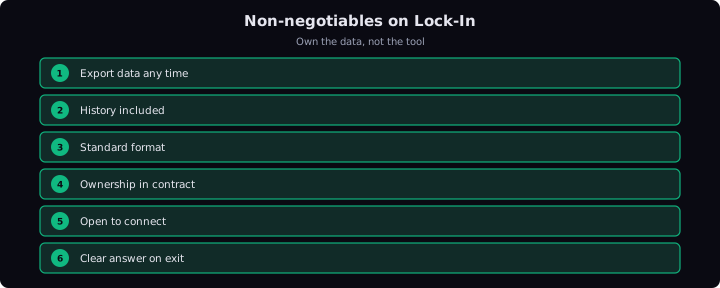
The protection is a short list of non-negotiables, and a leader can insist on all of them without any technical knowledge. First, data portability: you can export all your data, including its history and provenance, in a standard, readable format, at any time, at no punitive cost. Second, you own the data, stated plainly in the contract, not merely licence it back from the vendor. Third, openness: the tool can connect to your other systems rather than demanding you funnel everything through it alone. Fourth, an honest answer to a single question: if we left you in three years, what exactly would we walk away with. If a vendor cannot answer that cleanly, that is the answer.

Own the data, not the tool

The principle that resolves the whole decision is this: own the data, not the tool. Tools will come and go; the vendor you choose today may be acquired, may raise prices, or may simply fall behind. Your sustainability data, by contrast, must outlast any of them, because you will be answering for figures reported years ago long after a given tool is gone. A business that keeps its data portable and its provenance intact can change tools without losing its foundation. A business that lets a vendor trap its data has mortgaged its own trust to a supplier's fortunes. Choose the tool for today, but insist on the terms that let you keep what matters when today ends.

Bringing the module together

Automation, pipelines, built-in controls, a single source of truth, and a tool choice that avoids lock-in are not five separate topics but one arc. Each protects the trust the earlier module identified as the binding constraint. Together they turn sustainability data from a fragile annual scramble into durable infrastructure a business genuinely owns, and that is what carries it safely through the world of assurance, investors and the law.

Insist on portability and ownership so you can change tools without losing ground.

Check your understanding

Answer each from memory. Your results are saved in this browser and count toward your readiness — sign in (account panel above) to keep them across devices.

  1. What is vendor lock-in?

  2. Which is a genuine non-negotiable a leader should insist on in any tool?

  3. Why does owning the data matter more than owning the tool?

Flashcards

Recall-first review of the load-bearing facts.

0 reviewed · 8 left

Ready to test yourself?

12 graded questions with real explanations. You commit a confidence before each reveal — that is how you find what you only think you know.

Start practice quiz →
Automating the Infrastructure — Sustainability Data as Infrastructure | Contested Futures Academy · The Contested Futures Institute