What Sustainability Data Is and Why It Exploded
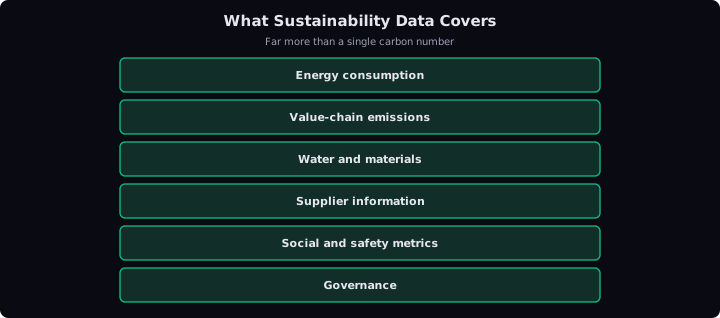
Sustainability data is far more than a carbon number. It spans energy use, emissions across a value chain, water and materials, supplier information and social metrics on people and safety. European regulation has turned it from a slim marketing appendix into a large, audited data domain that touches almost every part of a business.
By the end you can
- Describe the main categories of sustainability data a modern business collects.
- Explain why EU regulation, not goodwill, is the main force behind the surge.
- Recognise how far this data reaches beyond a single sustainability team.
- Contrast yesterday's reporting chore with today's large data domain.
More than a carbon number
When people hear sustainability data they often picture a single figure: tonnes of carbon. The reality is much wider. A modern business now tracks energy consumption across sites, emissions from its own operations and from every supplier and product in its value chain, water drawn and discharged, materials and waste, and a whole set of social measures covering employees, health and safety, pay gaps and human rights in the supply chain. Governance information sits alongside it all. This is the full breadth of what falls under the environmental, social and governance label, and each category has its own sources, units and update cycles.
Why it exploded
For years this information lived in a slim appendix at the back of an annual report, written mostly for marketing. That era is over, and the reason is regulation. The European Union's Corporate Sustainability Reporting Directive, or CSRDThe Corporate Sustainability Reporting Directive, an EU law obliging tens of thousands of companies to report detailed, comparable, externally audited sustainability information against European standards., obliges tens of thousands of companies to report against detailed European standards, with the numbers audited in much the same way financial accounts are. A firm can no longer describe its intentions in soft prose; it must produce specific, comparable, evidence-backed data points. That single shift, from a voluntary story to a mandated and audited dataset, is what turned a trickle into a flood.
Data that reaches everywhere
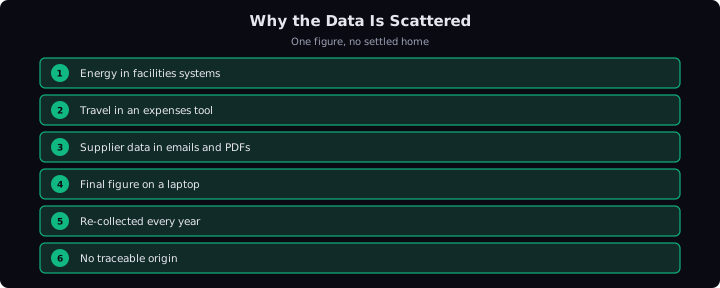
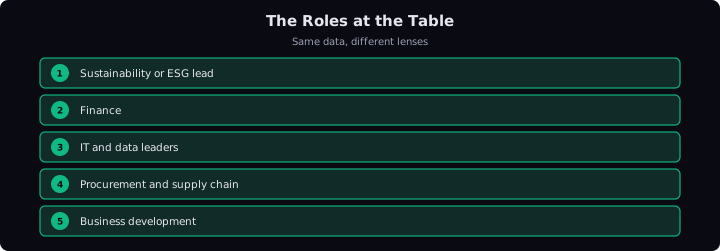
The surge matters because the data does not stay in one corner. Emissions figures depend on energy bills held by facilities teams and on travel records held by finance. Value-chain emissions, the largest category for most firms, depend on data pulled from hundreds of suppliers. Social metrics come from human resources systems. Pulling one CSRD report together therefore reaches into procurement, IT, finance, operations and legal. Consider a mid-sized manufacturer: to state the footprint of a single product it needs figures from the steel supplier, the logistics partner, its own factory meters and the finished-goods warehouse. No one team owns all of that.
From chore to domain
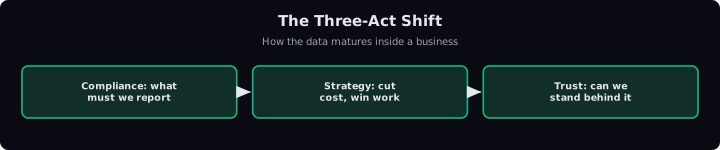
Put those forces together and the change is plain. What used to be an end-of-year writing task, handled by a few people with a spreadsheet, is now a large and fast-growing data domain that spans the organisation and must stand up to external scrutiny. It has the volume, the many sources and the accuracy demands that finance data has long carried. Treating it as a once-a-year chore no longer fits what it has become. The rest of this course follows what happens as businesses come to terms with that reality: data that started as compliance becomes strategic, and then has to become trustworthy.
Check your understanding
Answer each from memory. Your results are saved in this browser and count toward your readiness — sign in (account panel above) to keep them across devices.
Which of these best captures the scope of sustainability data today?
What is the main force that turned sustainability data from a trickle into a flood?
Why does pulling together one CSRD report reach across many teams?